

The Script Problem No One Talks About
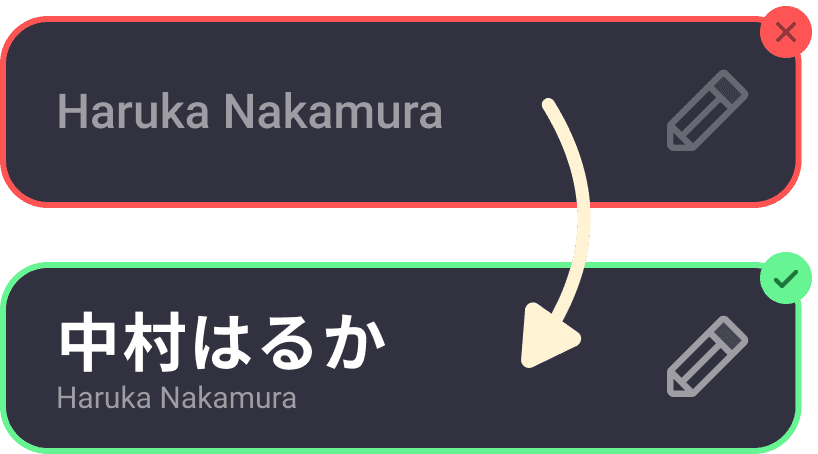
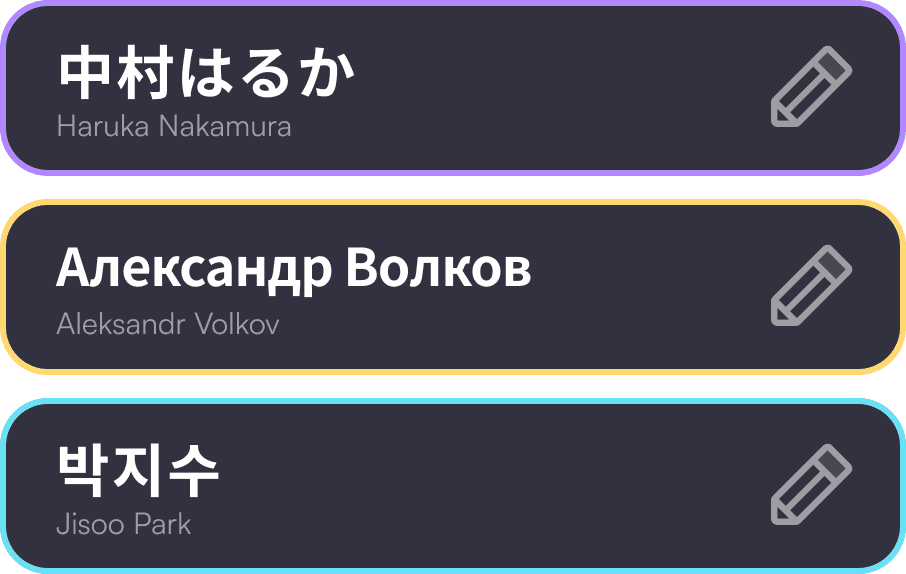
Most e-signature platforms assume every signer writes in Latin script. That assumption holds for English, Spanish, and French. It breaks the moment your signer's name is Γιώργος, Сергей, 田中, or 김민준. A Latin cursive font applied to a Cyrillic or Kanji name doesn't look like a signature. It looks like a rendering error.
Automatic Script Detection, Zero Configuration
Firma.dev automatically detects the writing system in each signer's name and presents signature styles designed for that script, with no developer configuration required. Five script families are supported out of the box.
The Problem With Latin-Only Signature Styles
Wrong Font, Wrong Message
When a signer with a non-Latin name opens a signature modal and sees only cursive Latin fonts, two things happen. First, the signature doesn't look like their actual name. Second, it signals that the platform wasn't built with them in mind. For businesses where the signing experience is part of the product, both of those outcomes are problems.
These Are Real Markets, Not Edge Cases
This isn't a niche edge case. Russian enterprise users, Japanese HR onboarding flows, Korean financial services platforms, all of these are real markets where Latin-only signing looks wrong and erodes trust. The fix shouldn't require developer effort for every locale you support.

How Firma.dev Handles Multi-Script Signatures
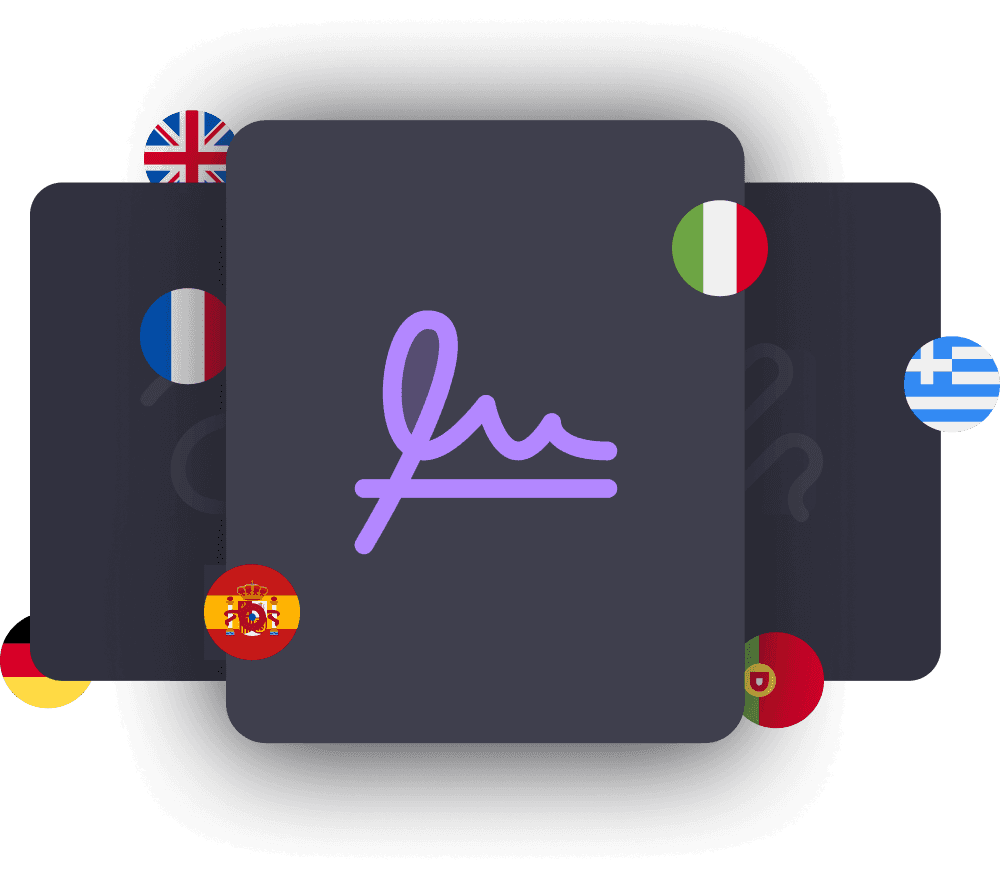
Firma.dev analyzes the Unicode code points in each signer's name before the signature modal opens and selects the appropriate script family automatically. The signer sees fonts that match their writing system from the first interaction. No language packs, no per-locale configuration, no conditional logic in your integration code. The five supported families and their fonts:
Latin
Parisienne, Sacramento, and Alex Brush. Classic cursive styles for English, Spanish, French, German, Portuguese, and every other Latin-script language. The default for most integrations, and the most broadly tested.
Cyrillic
Marck Script, Bad Script, and Caveat. Handwriting fonts with full coverage for Russian, Ukrainian, Bulgarian, Serbian, and other Cyrillic-script languages. Each style has enough character variation to read as a real signature rather than a typeset name.
Greek
Zen Kurenaido for a clean handwritten feel across the Greek alphabet, including full Greek Extended coverage for accented characters like ά, ί, and ό. Relevant for Greek and Cypriot users and for any platform operating under eIDAS in those markets.
Japanese
Zen Kurenaido and Klee One for Hiragana, Katakana, and Kanji. Both fonts respect the weight and balance that Japanese writing requires, which is harder to achieve than it sounds with a signature-style rendering.
Korean
Nanum Pen Script and Gaegu for natural Hangul handwriting. Both read as personal and handwritten rather than system-generated, which matters for signing contexts where the signature is meant to carry personal weight.
Every family also includes italic and plain fallbacks using Noto Sans, or Noto Sans JP and Noto Sans KR for CJK scripts, so there's always a clean professional option alongside the cursive styles.
Automatic Detection With Manual Override
Automatic detection covers the majority of cases cleanly. For bilingual signers or names that include characters from multiple scripts, signers can switch families manually via a dropdown in the signature modal. The selection takes a single click and the available styles update immediately.
Zero Configuration for Developers
One Integration, Every Script
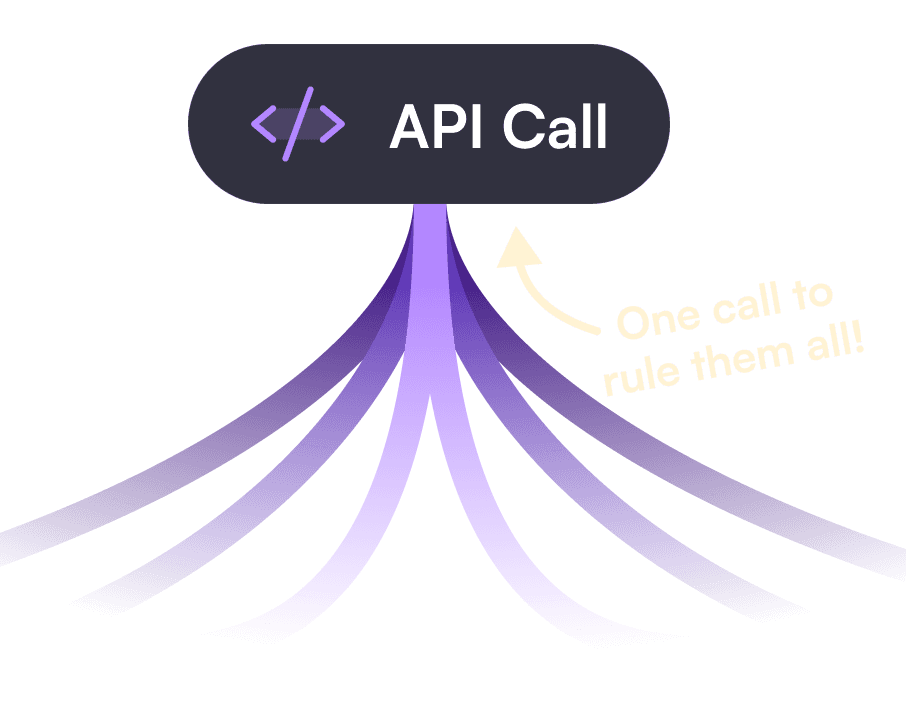
The integration code doesn't change. You set up signers the same way regardless of their writing system. Firma.dev handles script detection, font selection, and rendering behind the scenes.
Correct Rendering in Every Output, Automatically
Signatures render correctly in three places: the signing experience itself, the final signed PDF, and the completion certificate. All three are handled automatically. There's no post-processing step and no font embedding logic to manage on your side.
Global Signing, One API
For teams building global products, this means you can onboard signers in Japan, Russia, Greece, or Korea using the same API calls you use for everyone else. Localization at the signature level is handled without you having to think about it.
Who This Is For
SaaS platforms serving Japanese or Korean enterprise customers
HR tools, contract management software, and procurement platforms in these markets frequently handle signers whose names are entirely in Hangul or Japanese scripts. A signing flow that renders those names correctly signals product maturity.
Legal and financial platforms handling cross-border contracts
When a document has signers from multiple countries and writing systems, every signer needs a signature modal that works for them. Multi-script support means the same signing request handles a Russian counterparty and a French one without any special handling.
HR and onboarding tools operating across EMEA
Bulgarian, Ukrainian, Greek, and other Cyrillic or Greek-script markets are common expansion targets for European SaaS companies. Supporting those signers correctly from day one removes a localization gap that most e-signature APIs don't address.
